
About three years ago, I was deep in my own Roth conversion analysis — sitting with $1.4 million in a traditional IRA and facing the same question a 58-year-old former hospital administrator might face — when I realized I needed to change my approach. I told myself to slow down on conversions. Not stop. Slow down. And the reasons why reflect a broader shift in how I think about Roth conversion strategy over 55, based on what the research actually shows and what I’ve learned managing my own accounts.
I’ve spent more than 20 years personally managing my retirement accounts with no commissions, no product sales, and no incentive except to understand what actually works. And what I’ve learned — sometimes the hard way, through my own outcomes I wish had gone differently — is that Roth conversion strategy for people over 55 is far more nuanced than most guides suggest. The math changes. The priorities shift. The risks look different. Here’s what I’ve changed and why.
The Old Advice Wasn’t Wrong — It Was Incomplete
For most of my time managing my own conversions, I followed relatively standard Roth conversion guidance: convert in low-income years, fill up lower tax brackets, and let the tax-free growth compound over decades. That framework is still valid. But I was applying it too rigidly to my own situation in my late 50s and early 60s, and I was underweighting a handful of factors that matter enormously at that life stage.
The biggest thing I was underweighting? The interaction between Roth conversions and Medicare premiums. Specifically, IRMAA — the Income-Related Monthly Adjustment Amount. If your modified adjusted gross income (MAGI) exceeds $103,000 for a single filer or $206,000 for married filing jointly in 2024, your Medicare Part B and Part D premiums jump. Significantly. We’re talking an additional $69.90 to $419.30 per month per person in 2024, depending on how far over the threshold you land.
For a 63-year-old converting aggressively to fill up the 22% bracket, that extra income can trigger IRMAA two years later — Medicare looks at your income from two years prior. I wasn’t modeling that carefully enough. Now I do, every single time.
The Five Factors I Now Weigh Differently After 55
1. The Two-Year IRMAA Lookback
This one deserves its own section because it surprises most people planning conversions. If you convert $80,000 in 2024, Medicare uses that 2024 income to determine your 2026 premiums. For a couple both on Medicare, an IRMAA surcharge of even $150/month each adds $3,600 per year in costs. Over five years, that’s $18,000 in additional premiums — which meaningfully erodes the tax benefit of the conversion. Before converting any amount within five years of Medicare eligibility, it’s worth modeling your IRMAA exposure explicitly. A tax professional can help you run those numbers.
2. Social Security Taxation Thresholds
Once you begin Social Security — or plan to within a few years — Roth conversion income can increase the taxable portion of your benefits. Up to 85% of Social Security benefits become taxable once combined income exceeds $44,000 for married couples filing jointly — or $34,000 for single filers (IRS Publication 915). A conversion that looks like a 22% bracket decision can actually be taxed at an effective marginal rate closer to 40% once you factor in the Social Security torpedo effect. I’ve started calling this the “hidden bracket,” and it reframes the decision immediately.
3. The Realistic Time Horizon for Tax-Free Growth
The classic Roth argument assumes decades of tax-free compounding. At 35, that’s a compelling story. At 60, the math is tighter. If you convert $100,000, pay $22,000 in taxes today, and need that money in 12 years, the breakeven requires a specific return assumption that isn’t always realistic — particularly in conservative portfolios appropriate for someone near or in retirement. I now run breakeven analyses for every conversion scenario I’m considering, and I’ve stopped assuming the Roth always wins.
4. State Tax Treatment
This one gets overlooked constantly. Thirteen states don’t tax retirement income at all. If you’re in a high-tax state like California or New York and planning to retire to Florida or Texas, converting aggressively before the move is a significant mistake. I’ve seen research on people in their late 50s living in New Jersey who were one to two years away from moving to a no-income-tax state. Waiting saved them 6–10% in state taxes on every dollar converted. The federal savings from converting now rarely outweigh that differential.
5. Required Minimum Distributions Are Not Always the Emergency They’re Made Out to Be
The fear of RMDs drives a lot of conversion decisions I no longer think are always justified. Yes, RMDs from large traditional IRAs can push retirees into higher brackets. But the solution isn’t always aggressive pre-retirement conversion. For those with charitable intent, a Qualified Charitable Distribution (QCD) strategy — available starting at age 70½ — can satisfy RMDs entirely tax-free up to $105,000 in 2024. For anyone with a large IRA and philanthropic goals, that’s a powerful tool that reduces the urgency of expensive conversions.
What I Do Now Instead: A Calibrated Conversion Approach
My current process for managing conversions after 55 looks like this:
- Map the income timeline: When does Social Security start? When does Medicare begin? Are there pensions, rental income, or required distributions in the picture?
- Identify the true low-income windows: Often this is between retirement and age 63 or 65 — after earned income stops but before RMDs and Social Security begin. These are the golden years for conversions, and they’re narrow.
- Set hard IRMAA guardrails: I use income thresholds, not just tax brackets, as the ceiling for conversion amounts in Medicare-adjacent years.
- Run a Roth conversion vs. QCD comparison if you have charitable intent and a traditional IRA over $500,000.
- Model state tax changes explicitly if there’s any possibility of relocation within five years.
The result is usually smaller, more targeted conversions rather than the aggressive multi-year strategies I used to recommend more broadly. And in most cases, the after-tax outcome is better.
An Honest Caveat
I want to be transparent about one limitation of everything I’ve described: this is planning under uncertainty. Tax law changes. Congress adjusted RMD ages twice in recent years — first with the SECURE Act in 2019 (pushing RMDs to 72), then with SECURE 2.0 in 2022 (pushing them to 73, and 75 for those born after 1960). IRMAA thresholds adjust annually. What looks optimal today may look different in five years. I build flexibility into every plan because no Roth conversion strategy survives contact with a tax reform bill entirely intact.
Recommended Resources
These are books I either personally reference or turn to when I want to go deeper on the mechanics behind these strategies:
- IRAs, 401(k)s & Other Retirement Plans: Strategies for Taking Your Money Out — This is the reference I reach for when I’m sorting through a complex distribution question. It covers RMD rules, early withdrawal penalties, and inherited IRA treatment in detail that most guides skip over.
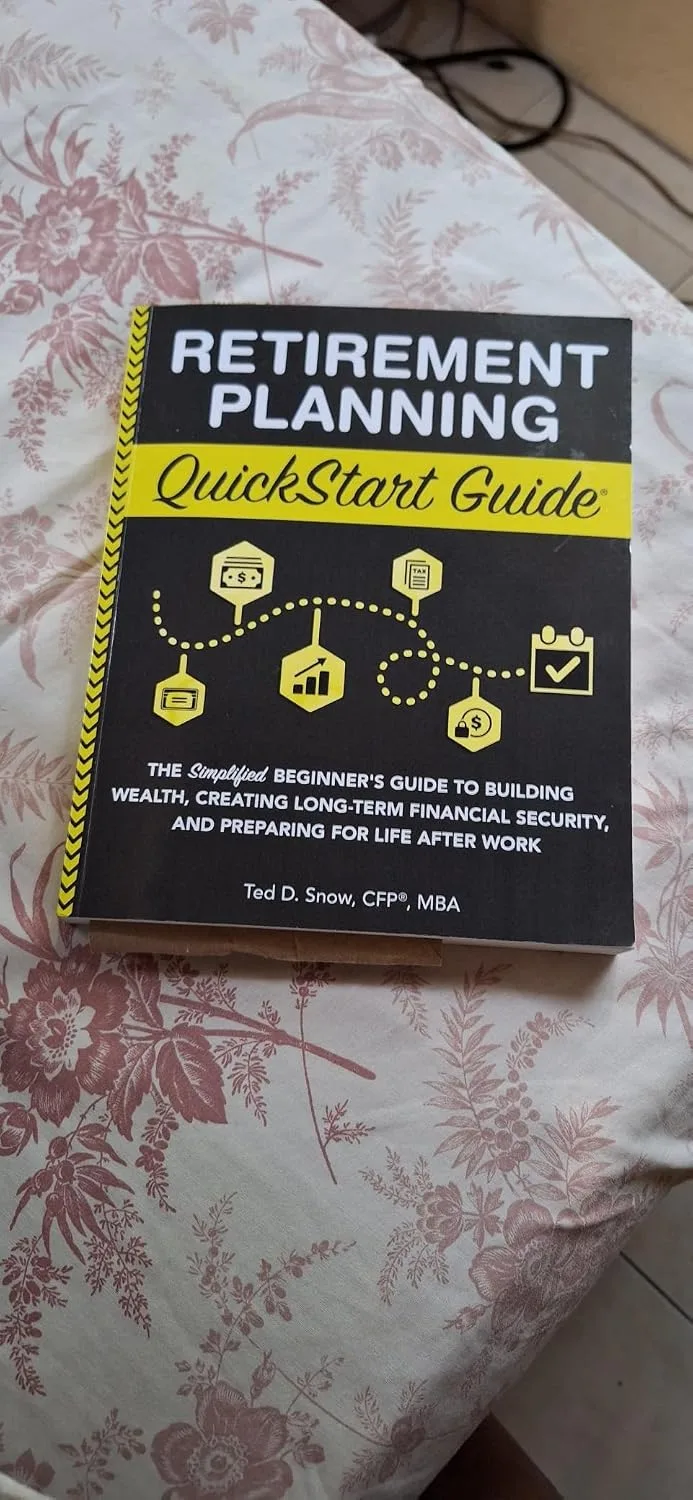
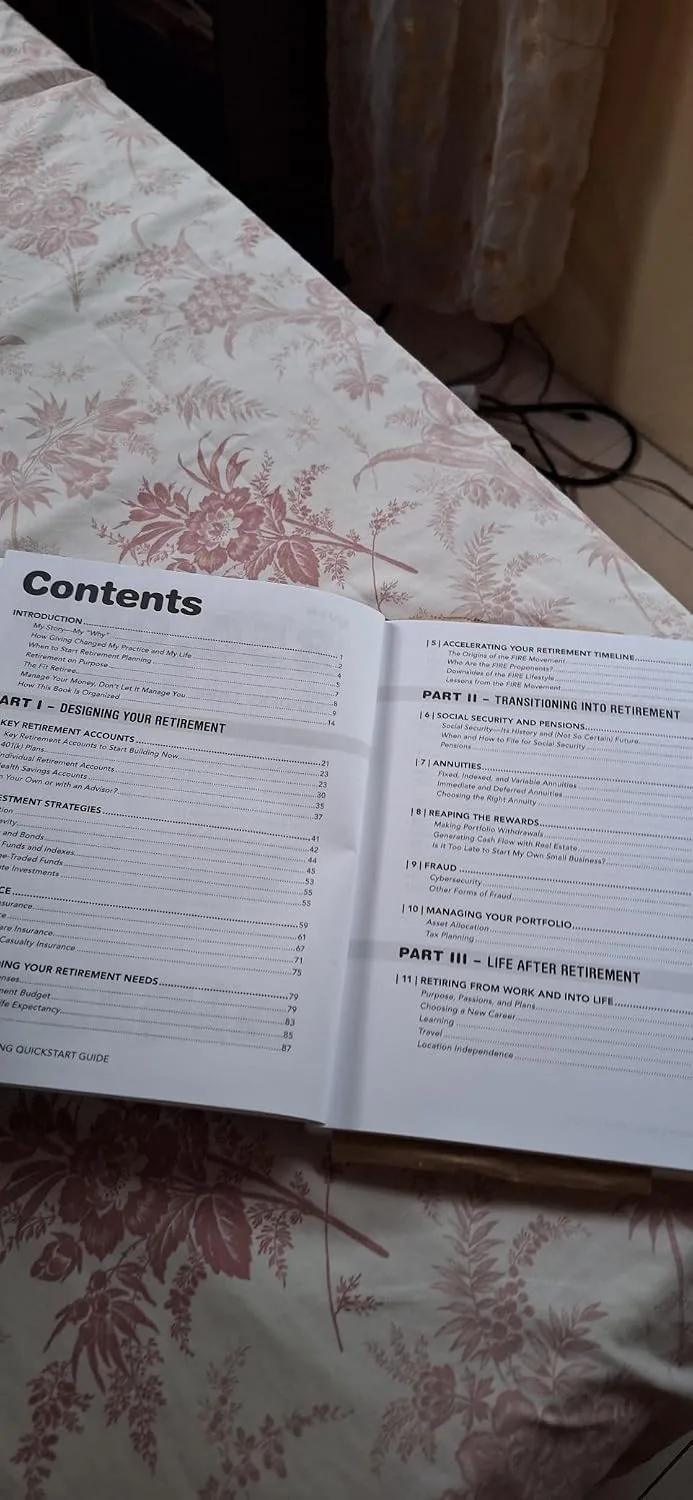
- Retirement Planning QuickStart Guide: The Simplified Beginner’s Guide to Building Wealth, Creating Long-Term Financial Security, and Preparing for Life After Work — A solid foundational resource if you want to understand the full retirement income picture before diving into conversion specifics.
- Living Trusts + Wills, Retirement, Tax & Estate Planning – The 6-in-1 Guide — Particularly useful if you’re over 55 and thinking about Roth conversions in the context of estate planning and wealth transfer, not just your own retirement income.
The Bottom Line
My thinking on Roth conversions for people over 55 didn’t change because I was wrong before. It changed because I got more precise. The window for high-impact, low-risk conversions is real — but it’s narrower than it looks, and the landmines around Medicare premiums, Social Security taxation, and state taxes are more consequential than most online Roth content acknowledges.
If you’re over 55 and working through your own conversion strategy, the single most valuable thing you can do is map every income source, every threshold, and every timing decision before you convert a dollar. The tax savings are real. So are the traps.
The Book That Made Me Reconsider My Entire Roth Conversion Playbook After 55
When you’ve been running your own Roth conversions for two decades, you assume you’ve seen every angle. But the withdrawal sequencing rules and tax bracket thresholds are far more nuanced—especially once RMDs and Medicare thresholds enter the picture—and I realized I needed a resource that covered the real mechanics, not just the theory.
What works
- Breaks down the actual order of withdrawal rules across multiple account types, which is where most conversion mistakes happen for the 55+ crowd
- Explains the interaction between RMDs, IRMAA (Medicare premiums), and conversion decisions—three variables that completely change the math after 55
- Uses concrete scenarios rather than abstract principles, making it easy to model different situations without guessing
What doesn’t
- Doesn’t address state income tax variations, which can swing a conversion decision significantly depending on where you live or plan to retire
- Published before some recent tax law changes, so you’ll need to cross-reference current rules (though the core withdrawal mechanics remain solid)
I almost dismissed it as “too technical” the first time I opened it, but once I worked through the withdrawal sequencing examples with my own retirement accounts, I realized how much my earlier conversions had been based on incomplete information. IRAs, 401(k)s & Other Retirement Plans: Strategies for Taking Your Money Out is now the reference I turn to when I’m thinking through withdrawal strategy and why slowing down conversions sometimes makes sense.




About This Article

Written by Jennifer Walsh. Jennifer Walsh isn't a financial advisor — she's spent more than 20 years personally managing her own retirement accounts and obsessively optimizing her own Roth conversions and tax strategy. She writes to demystify complex financial concepts so everyday investors can make confident, informed decisions, with no products to sell and no commissions behind her recommendations. More about this site.
Scope and limits. Jennifer is not a financial advisor or tax professional, and nothing here is personalized advice. Retirement and conversion rules change and depend on your own situation — confirm with a CPA or fiduciary advisor before you act.
Verify this against a primary source
Specifics change, and your situation may differ from the one described here. These are the authorities worth checking directly:
- IRS — contribution limits, conversion rules and current publications
- Social Security Administration — benefit timing and taxation of benefits
- FINRA — investor education and fee comparison tools