
A few years ago, a surgeon came to me frustrated. She was earning just over $230,000 a year, had maxed out her 401(k), and kept hearing that she “made too much” to contribute to a Roth IRA. She assumed that door was permanently closed. It wasn’t. Within one meeting, we had a backdoor Roth IRA strategy in place — and she’s been using it every single year since.
This isn’t a step-by-step introduction to the backdoor Roth — if you’re still working out what it is and how the mechanics work, start with our full backdoor Roth IRA walkthrough. What I want to cover here is different: after two decades of running this strategy in my own accounts and following it closely in investor communities, I’ve watched the same handful of mistakes derail an otherwise simple maneuver, over and over. This is the list I wish everyone read before their first conversion.
Mistake #1: Not Checking for Other Traditional IRA Money First
This is the single most expensive mistake I see, and it’s almost always avoidable. Many guides skip the pro-rata rule entirely, and it can turn a tax-free conversion into a surprisingly painful tax event.
If you have any pre-tax money sitting in other traditional IRAs, SEP IRAs, or SIMPLE IRAs, the IRS doesn’t let you cherry-pick which dollars you’re converting. Instead, it looks at the total value of all your traditional IRA accounts combined and taxes the conversion proportionally.
Here’s a real example. Someone contributed $7,000 non-deductibly to a traditional IRA as a backdoor contribution, but she also had $63,000 sitting in an old rollover IRA from a previous employer that she’d forgotten about. Her total traditional IRA balance was $70,000. Only 10% of that total ($7,000 / $70,000) was after-tax money. So when she converted the $7,000 to Roth, only 10% — or $700 — was tax-free. She owed ordinary income tax on the remaining $6,300, money she hadn’t budgeted for.
Before using the backdoor strategy, inventory all of your IRA accounts — not just the one you’re about to open. The most common fix is to roll any pre-tax IRAs into your current employer’s 401(k) plan (if the plan accepts rollovers), which removes those balances from the pro-rata calculation entirely, before you contribute a single dollar to the new traditional IRA.
Mistake #2: Letting the Money Sit and Grow Before Converting
Don’t let the contribution sit and grow before you convert it. Even a few days of earnings will create a small taxable amount, since only your original contribution — not any gains on it — converts tax-free. Convert as soon as the funds clear, usually within one to five business days, and keep the contribution in a money market or settlement fund rather than investing it in the interim.
Mistake #3: Skipping Form 8606
File Form 8606 with your tax return every single year you make a non-deductible contribution or a conversion. This is non-negotiable. Form 8606 tells the IRS that your contribution was non-deductible and tracks your basis. Skipping it is one of the most expensive mistakes I see — without it, the IRS has no record that you already paid tax on the money, and you risk being taxed on it a second time when you eventually withdraw it.
Mistake #4: Assuming It’s Somehow Illegal or Too Risky
I still get asked this every year: “Isn’t this a loophole the IRS is going to shut down?” As of 2026, the backdoor Roth remains fully legal. There was significant concern in late 2021 when the Build Back Better Act proposed eliminating the strategy for high earners, but that provision did not pass. The One Big Beautiful Bill Act, signed in 2025, did not touch the backdoor Roth or the mega backdoor Roth either. The IRS has continued to acknowledge the strategy in its own publications, and there is no pending legislation I’m aware of that would close it in the near term.
That said: take advantage of it while it exists. Tax law can change. We’ve seen the contribution limits shift, the income thresholds adjust, and the rules evolve over my 20 years of doing this. Build your strategy around what the law currently allows, and stay flexible. For 2026, the direct Roth contribution phase-out is $153,000–$168,000 for single filers and $242,000–$252,000 for married couples filing jointly (IRS Notice 2025-67); above those ranges, the backdoor route is what’s left.
Mistake #5: Doing It Even When It Doesn’t Make Sense
Not every situation is a good fit for a backdoor Roth, and it’s worth being honest about that instead of pushing a one-size-fits-all answer. I’ve seen the numbers on situations where someone has a large SEP IRA — over $400,000 — with no outside employer to roll it into, which means the pro-rata rule makes the backdoor Roth essentially useless without a major restructuring of retirement accounts first. If you’re close to retirement and won’t have time for the Roth to grow meaningfully, or your current marginal tax rate is already very low, the backdoor conversion may not be worth the added complexity either. A tax professional can help you evaluate whether it makes sense for your specific circumstances.
The Mega Backdoor Roth: A Brief Note
If your employer’s 401(k) plan allows after-tax contributions and in-service withdrawals or conversions, there’s an extended version of this strategy called the mega backdoor Roth. It allows you to contribute the gap between your elective deferrals and the overall IRC §415(c) limit as after-tax 401(k) dollars and then convert those to Roth. For 2026, the overall §415(c) limit is $72,000 and the standard employee deferral limit is $24,500, leaving a gap of up to roughly $47,500 in after-tax contributions (less whatever your employer contributes in matching funds) for those whose plans allow it (IRS COLA table). Not all plans allow it, but if yours does, it’s worth exploring. Savers whose plans support it can move $50,000+ annually into Roth accounts this way.
Resources I Recommend
Tax strategy rarely exists in isolation. Whether you’re self-employed, an investor, or simply trying to get smarter about where your money goes, here are a few books I’ve found genuinely useful over the years:
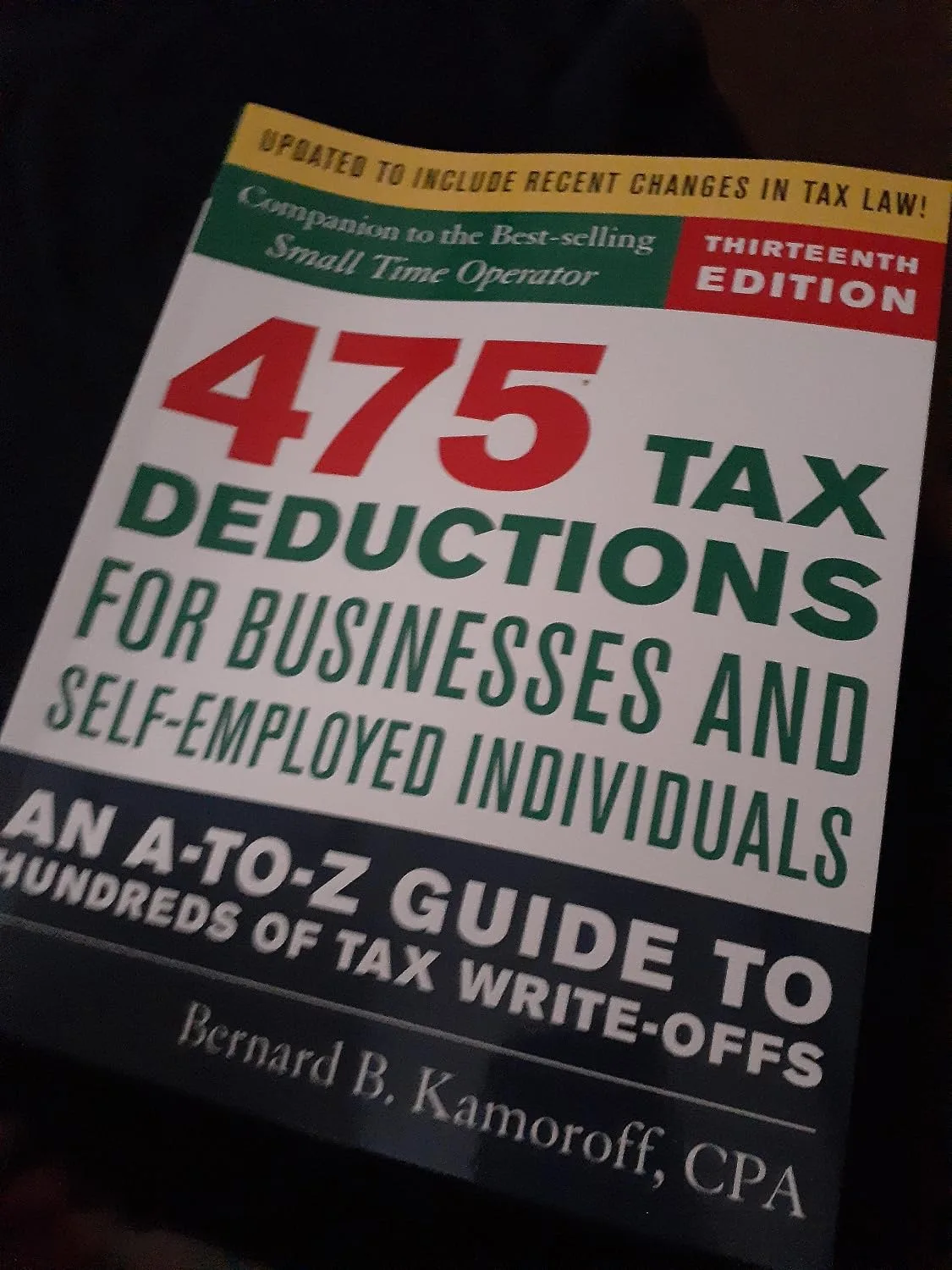
- 475 Tax Deductions for Businesses and Self-Employed Individuals: An A-to-Z Guide to Hundreds of Tax Write-Offs — An indispensable reference for anyone who is self-employed or runs a business and wants to understand every legal deduction available. I’ve found it useful even after 20 years of managing my own accounts.
- The Ultimate Guide to Opportunity Zones 2.0: How the Wealthy Defer and Eliminate Capital Gains Taxes — If you have significant capital gains and haven’t explored Opportunity Zones as a complement to your Roth strategy, this is a strong starting point.
- SEP IRA Investing – Beginner’s Guide to Successfully Starting and Investing in SEP IRA Plans — For self-employed individuals especially, the SEP IRA is often the first retirement account to set up. This guide covers the fundamentals clearly and without unnecessary complexity.
Final Thoughts
The backdoor Roth IRA is not a secret and it’s not complicated once you understand the mechanics. What trips people up isn’t the concept — it’s the details: an old rollover IRA they forgot about, a contribution left to grow for a few weeks too long, a skipped tax form, or doing the strategy in a situation where it simply doesn’t pay off.
If you take one thing away from this post, let it be this: check for other traditional IRA balances before you contribute a single dollar. Get that piece right and the rest is relatively straightforward.
If you’re unsure whether your specific situation makes this strategy worthwhile, work with a fee-only financial planner who can look at your full picture — not someone who earns commissions on the products they recommend. The math matters too much for the advice to be anything other than objective.
The Tax Reference I Use for Backdoor Roth Income Recognition
Once you’ve decided a backdoor Roth is right for you, the execution hinges on understanding one critical tax rule: the pro-rata calculation and whether you have any pre-tax IRA balances sitting around. This book gives you the reference material to confidently handle the tax filing side of the conversion without getting blindsided by Form 8606 or pro-rata complications.
What works
- Detailed explanation of IRA deduction rules and the pro-rata calculation—exactly what trips up backdoor Roth filers when they also have SEP-IRAs, SIMPLE IRAs, or old rollover IRAs sitting around.
- Covers Form 8606 filing requirements and how the IRS treats nondeductible contributions, which is where most backdoor Roth tax mistakes actually live.
- Organized as a reference guide, so you can quickly look up what’s deductible in your specific income and employment situation without reading cover to cover.
What doesn’t
- This is a business and self-employed deduction guide, so while it covers IRA rules thoroughly, it assumes you already understand the mechanics of the backdoor conversion itself.
- Doesn’t address state-specific tax implications of conversions, which matter significantly if you live in a high-tax state like California or New York.
If you’re working with a CPA who’s already handling your backdoor Roth filings and pro-rata calculations, you probably don’t need this one. But if you want to understand the tax rules deeply enough to catch your own mistakes or explain them to your preparer, grab 475 Tax Deductions for Businesses and Self-Employed Individuals: An A-to-Z Guide to Hundreds of Tax Write-Offs.

About This Article

Written by Jennifer Walsh. Jennifer Walsh isn't a financial advisor — she's spent more than 20 years personally managing her own retirement accounts and obsessively optimizing her own Roth conversions and tax strategy. She writes to demystify complex financial concepts so everyday investors can make confident, informed decisions, with no products to sell and no commissions behind her recommendations. More about this site.
Scope and limits. Jennifer is not a financial advisor or tax professional, and nothing here is personalized advice. Retirement and conversion rules change and depend on your own situation — confirm with a CPA or fiduciary advisor before you act.
Verify this against a primary source
Specifics change, and your situation may differ from the one described here. These are the authorities worth checking directly:
- IRS — contribution limits, conversion rules and current publications
- Social Security Administration — benefit timing and taxation of benefits
- FINRA — investor education and fee comparison tools